Why Every RVer Should Consider Portable Solar
Shore power at campgrounds means cords, hookup fees, and being tied to sites with electrical pedestals. Portable solar changes that equation entirely. A panel or two on your roof or propped up outside lets you generate free electricity from the sun — quietly, with no fuel, no generator noise, and no campsite restrictions.
For boondocking and dry camping specifically, solar is often the primary power source. It keeps your house batteries charged throughout the day so you can run lights, fans, a CPAP machine, a 12V fridge, and charge devices — all without firing up a generator. Even RVers who mostly stay at full-hookup campgrounds benefit from solar as a backup and for the occasional off-grid night.
Portable panels are the easiest entry point. No roof penetrations, no permanent installation — just unfold the panel, point it at the sun, and plug it in. When you're ready to move on, fold it up and store it.
How Much Wattage Do You Actually Need?
This is the first question to answer before buying. Wattage determines how much power you can generate per hour of peak sunlight (roughly 4–6 hours per day depending on location and season). More watts = more power, but also more weight, more cost, and more panel to unfold and position.
Light Use
- Phone and device charging
- LED lighting
- Small fans
- Weekend campers and occasional dry camping
- Best price-to-entry ratio
- Renogy: $100–$150 · BougeRV: under $100
Moderate Use
- 12V fridge / cooler
- CPAP machine (without heated humidifier)
- Laptop and multiple devices
- Regular boondockers and weekend warriors
- The sweet spot for most RVers
- Renogy: $200–$250 · BougeRV: $150–$200
Heavy Use
- Full-time boondocking setup
- Multiple appliances running simultaneously
- Larger battery bank top-off
- Full-timers and serious off-grid campers
- Renogy only — BougeRV has no portable 300W+
- Renogy 300W: $350–$400
Side-by-Side Comparison
Both brands offer foldable, portable panels designed for RV and camping use. All models below are N-type monocrystalline with approximately 25% conversion efficiency.
| Feature | Renogy 100W / 200W / 300W portable |
BougeRV 100W / 200W portable |
|---|---|---|
| Panel Type | N-Type Monocrystalline | N-Type Monocrystalline |
| Peak Efficiency | Up to 25% | Up to 25% |
| Weather Resistance | IP65 (select models) / IP67 (suitcase) | IP65 — all portable models |
| Panel Styles Available | Kickstand, Suitcase, Blanket/Foldable | Foldable fiberglass (kickstand) |
| USB Output (direct) | ✓ Yes — USB-A & Type-C (select) | ✓ Yes — USB-A & Type-C |
| MC4 Connectors | ✓ Yes | ✓ Yes |
| Charge Controller Included | Some kits only — check listing | ✗ Panel only — controller sold separately |
| Portable 300W+ Option | ✓ Yes — 300W suitcase ($350–$400) | ✗ No portable 300W+ available |
| Brand Track Record | 10+ years, dominant RV solar brand | Growing fast, strong recent reviews |
| 100W Price | $100–$150 | under $100 about $20 less than Renogy |
| 200W Price | $200–$250 | $150–$200 about $75 less than Renogy |
| 300W Price | $350–$400 | Not available (portable) |
| Best For | High-output needs, full-timers, and buyers who want the most trusted solar brand | Budget-conscious buyers who need 100W or 200W — exceptional value at both wattages |
The Reviews
Renogy Portable Solar Panels
🏆 Best Overall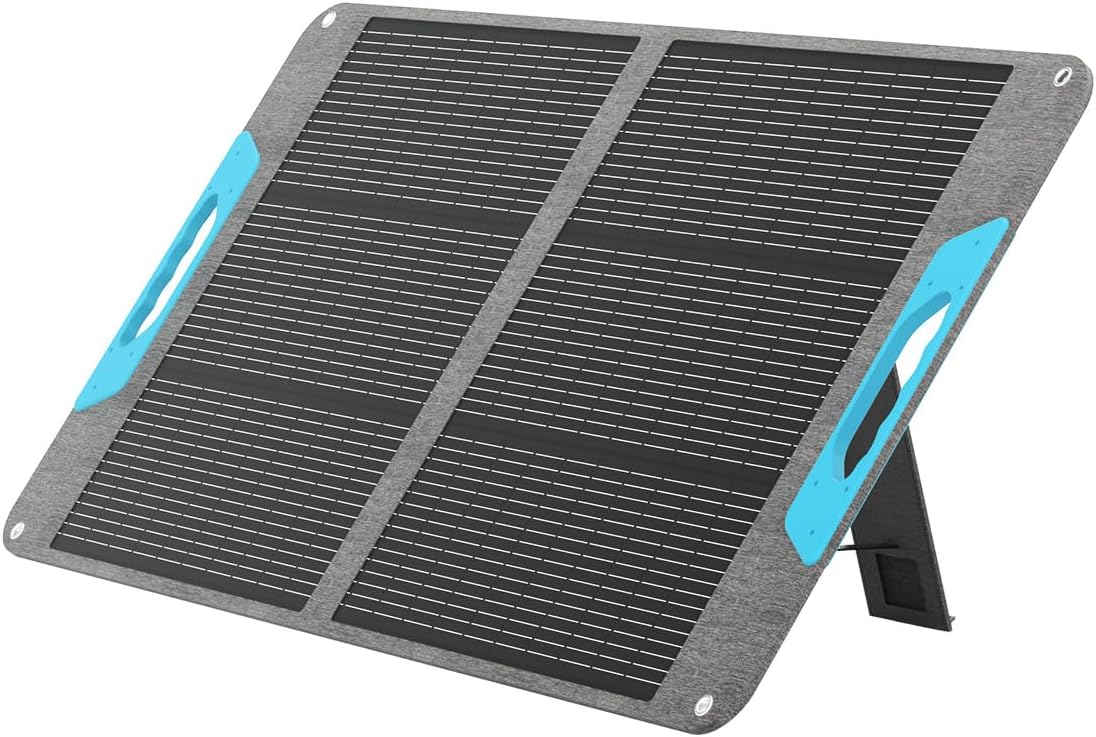
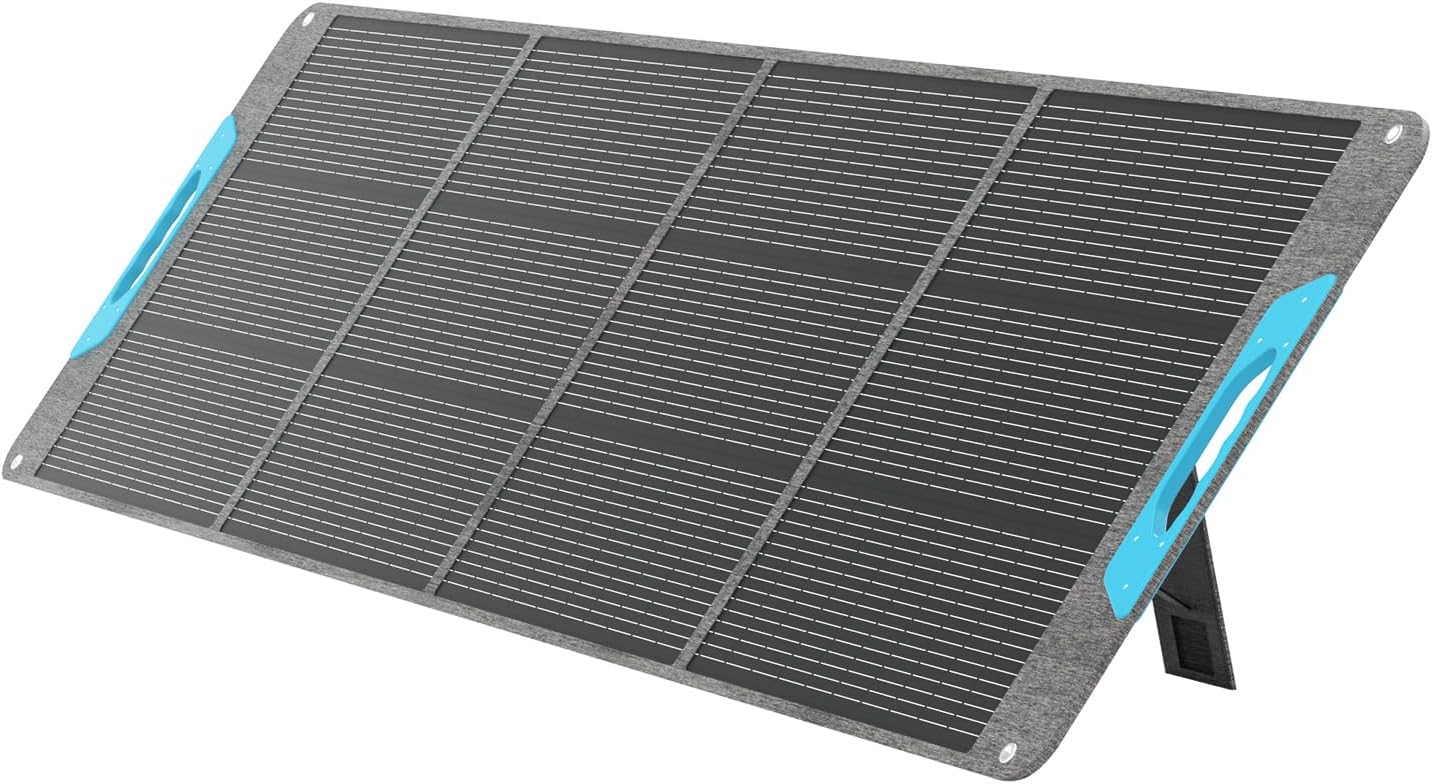
Renogy is the name that comes up first in almost every RV solar conversation, and for good reason. They've been the dominant portable solar brand in the RV market for over a decade, with a product range that covers virtually every use case — from a simple 100W kickstand panel for occasional charging to a serious 300W suitcase for full-time boondockers.
Their portable lineup spans three main styles. The kickstand models fold flat and prop up on built-in legs — simple, affordable, and easy to use. The suitcase models are the most popular for RVers: two rigid panels hinged together in a rugged case with a built-in handle, IP67 waterproof rating, and sturdy kickstands. The blanket/foldable models are the most compact — designed for backpackers and campers who want maximum wattage in the smallest storage footprint.
The honest trade-off against BougeRV is price. At 100W and 200W, you'll pay more for the Renogy nameplate without getting meaningfully better specs. Where Renogy earns its premium is at the high end: no other brand makes a portable foldable 300W panel in the $350–$400 range. If you need serious output, Renogy is your only real option.
| Model | Watts | Style | Price | Amazon |
|---|---|---|---|---|
| 100W Kickstand | 100W | Foldable w/ kickstand | $100–$150 | View → |
| 200W Foldable | 200W | Foldable, IP65 | $200–$250 | View → |
| 300W Suitcase | 300W | Rigid suitcase, IP67 | $350–$400 | View → |
Pros
- Most trusted name in RV solar
- Widest range of portable options
- Only brand with portable 300W+
- Multiple styles for every use case
- Strong warranty and customer support
- Huge owner community and tutorials
Cons
- Pricier than BougeRV at 100W and 200W
- Charge controller often sold separately
- More expensive for entry-level buyers
BougeRV Portable Solar Panels
💰 Best Value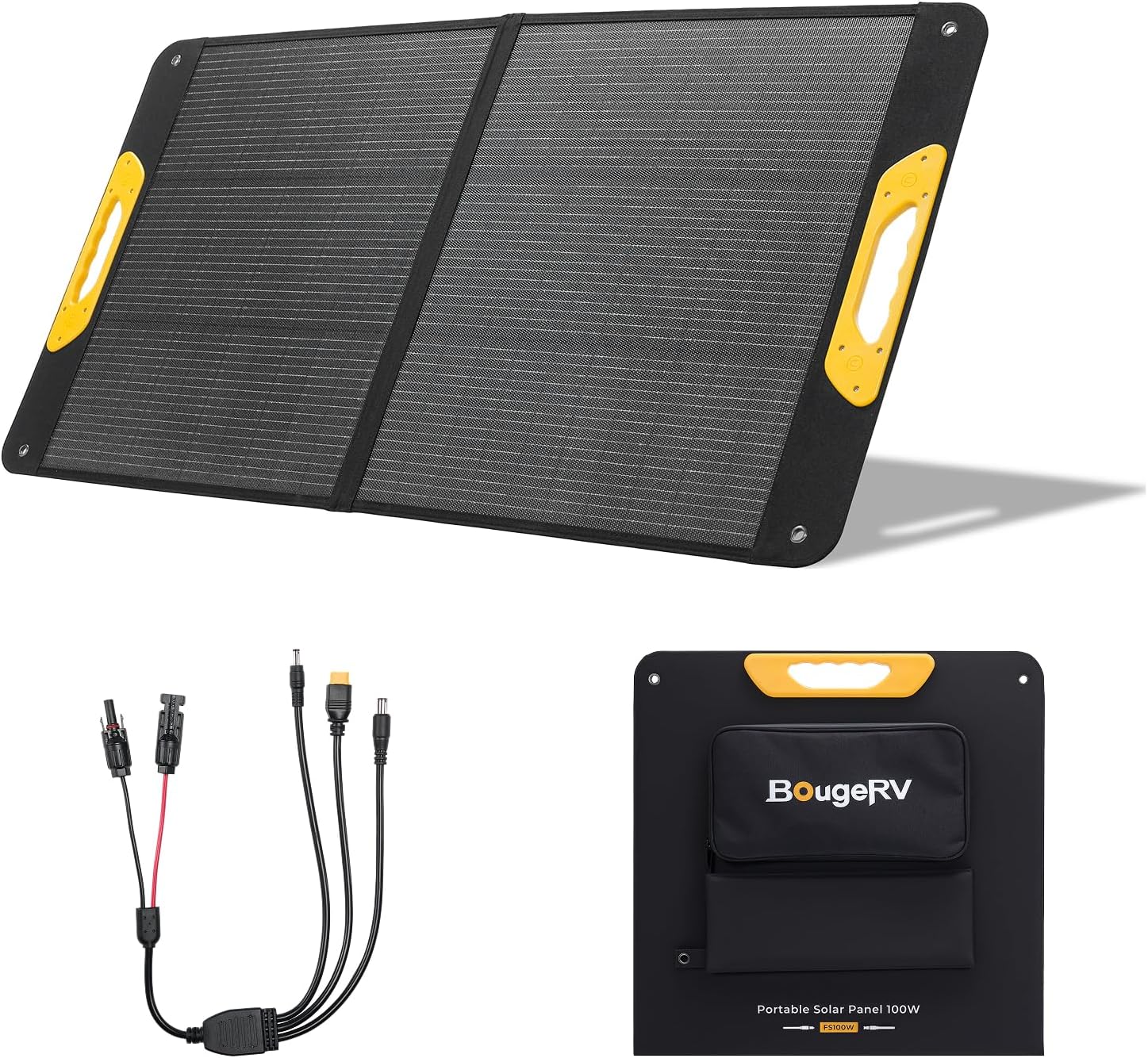

BougeRV has emerged as the most compelling value alternative in portable RV solar, and the price difference against Renogy is hard to ignore. Their portable panels use the same N-type monocrystalline cells, claim the same 25% peak efficiency, and carry an IP65 waterproof rating — at $20–$76 less than the equivalent Renogy model depending on wattage.
The standout feature is their fiberglass frame construction. Most portable solar panels use a fabric backing, but BougeRV's fiberglass panels are more rigid, more durable, and better at maintaining their shape over time. This matters in an RV context where panels get folded and unfolded constantly, stored in compartments, and sometimes forgotten in awkward positions. The fiberglass holds up better to that kind of use than soft-fabric alternatives.
The limitation is range. BougeRV's portable lineup tops out at 200W. Their 400W panel is a rigid rooftop panel — not the foldable portable format we're comparing here. If you need 300W or more in a portable configuration, Renogy is your only real option. But for 100W and 200W buyers, BougeRV delivers a genuinely excellent panel at a meaningfully lower price.
| Model | Watts | Style | Price | Amazon |
|---|---|---|---|---|
| 100W Foldable | 100W | Fiberglass, IP65 | under $100 | View → |
| 200W Foldable | 200W | Fiberglass, IP65 | $150–$200 | View → |
Pros
- $20–$76 cheaper than Renogy at same wattage
- Durable fiberglass frame construction
- IP65 rated on all portable models
- Same N-type monocrystalline, 25% efficiency
- USB-A and Type-C direct output
- Strong and growing owner reviews
Cons
- No portable 300W+ option
- Shorter track record than Renogy
- Smaller ecosystem (no matching controllers)
- Charge controller sold separately
Our Recommendation
For Most RVers (100W or 200W)
BougeRV. If you need 100W or 200W, BougeRV gives you the same specs and build quality as Renogy for significantly less money. The roughly $75 savings on a 200W panel is real — and the fiberglass construction is arguably more durable than Renogy's fabric-backed options. Hard to argue against it.
For High-Output Needs (300W+)
Renogy. If you need serious portable power — full-time boondocking, large battery banks, multiple appliances — Renogy's 300W suitcase is the only portable option at this wattage. No other brand offers it. Renogy also wins if you want to build a full matched ecosystem with controllers, batteries, and monitors.
Frequently Asked Questions
Do I need a charge controller with a portable solar panel?
Yes, if you're charging a 12V battery bank. A charge controller regulates the voltage from the panel so it doesn't overcharge your batteries. Some Renogy kits include a controller — BougeRV panels do not. If you're plugging directly into a power station (like a Jackery or EcoFlow), the station has its own built-in regulation, so no separate controller is needed.
How many solar panels do I need for my RV?
A rough rule: figure out your daily power consumption in watt-hours, divide by the peak sun hours in your area (typically 4–5 hours), and that's the wattage you need. A 200W panel produces about 800–1,000 watt-hours per day — enough to run a 12V fridge, charge devices, and power LED lighting without draining your battery. Most casual boondockers get by with 100–200W. Full-timers typically run 400W or more.
What's the difference between a portable panel and a rooftop panel?
Rooftop panels are permanently mounted on your RV roof and wired into your electrical system. They're more efficient (always deployed, always charging) but require installation and can't be aimed at the sun. Portable panels fold up for storage and can be positioned to track the sun throughout the day — important when your rig is parked in partial shade. Many RVers run both: a rooftop array for base charging and a portable panel for extra output when dry camping.
Can I use a portable solar panel to charge a power station instead of my RV batteries?
Yes — and this is one of the most popular setups for casual campers. A 100W or 200W portable panel connected to a Jackery, EcoFlow, or Bluetti power station gives you a completely self-contained solar charging system with no wiring, no installation, and no charge controller needed. The power station charges from the panel during the day and powers your devices at night.
How long will a portable solar panel last?
Most quality solar panels are rated for 25 years of output at 80% or more of their original capacity. For portable panels that get folded, transported, and stored regularly, longevity depends more on how well you protect the panel from physical damage than on cell degradation. Keep connectors dry, store the panel away from sharp objects, and avoid folding it against the grain — and it should last the life of your RV.